


News | ዜናዎች | Oduu
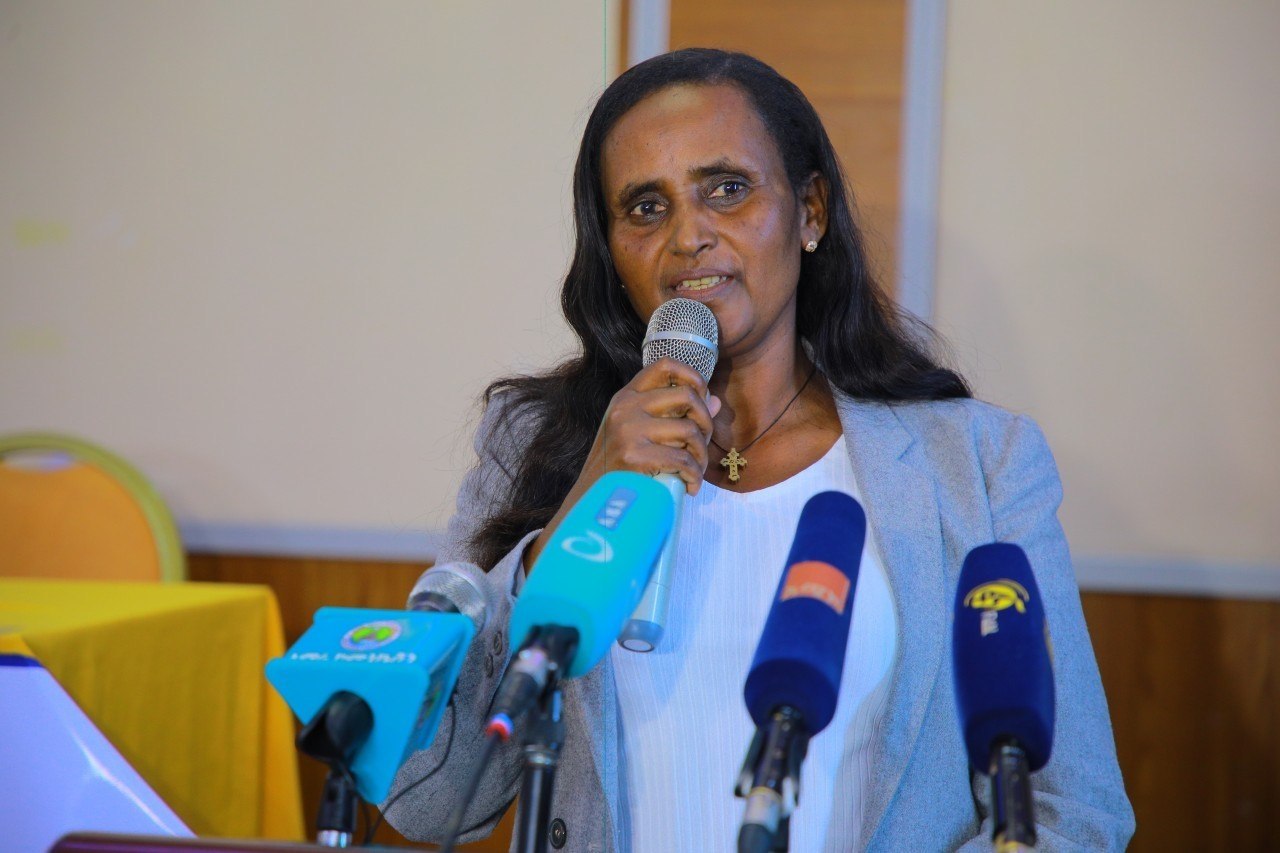
Amhara National Regional State Launched ECD Dashboard Program.
Bahir Dar, 17–19 September 2026 - What does better data mean for early childhood development? In Amhara Region, the answer is increasingly connected to something practical: helping people understand what is happening on the ground to make better decisions for children and families.
This was at the heart of the Amhara ECD Dashboard Validation and Experience-Sharing Workshop, held in Bahir Dar from 17–19 September. The three-day workshop brought together regional leaders, sector representatives, ECD experts, dashboard specialists and the African Centre for Early Childhood Development (AfC-ECD) leadership and experts to share experience, learn from practice to enable the development of an ECD dashboard.
The workshop brought together 64 participants. Of these, 32 represented the four AfC-ECD ECD scale-up regions, 27 came from Amhara, and five from AfC-ECD. This mix created an opportunity for participants to learn from one another and reflect on how stronger information systems can support ECD planning and coordination.
The first day focused on experience in ECD and dashboard development in Amhara. Participants looked at the proposed indicators, data flows, reporting functions, and visualizations the conversation, however, went beyond the technology. A key question was how the dashboard can provide information that is useful to the people responsible for planning, coordinating and delivering ECD services.
The second day brought the discussion closer to everyday ECD practice. Participants visited different service and implementation areas across Bahir Dar, including Grace Civil Society Organization, Bahir Dar Health Center, Cocos Pre-Primary School, Nubia Daycare and Pre-Primary School, a workplace daycare centre, and a community playground.
At Grace Civil Society Organization, participants saw practical work supporting children with different needs and promoting more inclusive ECD services. They also learned about the Model ECD Village, which brings together daycare, pre-primary and primary education, nutrition, family wellbeing, mothers’ economic empowerment and community participation. The experience showed how children’s development is closely linked to the wellbeing of their families and communities.
At Bahir Dar Health Center, participants saw how ECD can become part of routine health services. Health Extension Workers support parents and caregivers through parental coaching, developmental monitoring, early identification and referral. The experience highlighted how existing health systems can provide an important entry point for reaching families and supporting children’s development.
The visits to Cocos Pre-Primary School and Nubia Daycare and Pre-Primary School offered another perspective. Participants observed play-based learning, responsive teaching and approaches that connect care, learning, health, nutrition, protection and family engagement. Together, the visits showed that ECD is not limited to one service or sector. It is shaped by the different environments in which children live, learn and grow.
These experiences also helped participants look at the dashboard differently. Rather than seeing it simply as a digital platform, they considered what information it should capture and how that information could reflect the realities of children and families. The validation discussions focused on the relevance of the indicators, the dashboard’s design and functionality, data quality and governance, and areas that need further improvement. Participants also discussed possible links with existing systems such as DHIS2 and the MFR system, as well as questions around data sources, reporting, interoperability, ownership and sustainability.
On the final day, the focus shifted from learning and discussion to action. Participants worked in regional groups to establish ECD Dashboard Development Working Groups and develop initial action plans covering stakeholder engagement, indicators, data mapping, dashboard development, testing and continued validation.
The next steps will focus on finalizing the dashboard, strengthening data quality and governance, clarifying responsibilities, building capacity and exploring how the dashboard can work with existing information systems. The lessons from Amhara will also provide opportunities for learning and adaptation in other ECD scale-up regions.
For AfC-ECD and its partners, the workshop was an important step in bringing together data, experience and action, with a shared focus on strengthening ECD systems and ultimately improving the experiences and opportunities of children and families.